

This post was written by 起点传媒member Vikki Orepitan.
The third week of 起点传媒Reads focused on Chapters 5 and 6 of Mary Styslinger鈥檚 Workshopping the Canon. Chapter 5, 鈥淲ays to Talk,鈥� addressed student-led discussions especially in book clubs and Socratic seminars. Chapter 6 is about 鈥淢ini-Lessons.鈥�
Last week, I discovered that although I鈥檝e been reading since age four (mom-verified), I am NOT a storyteller. This week better suited my skill set:听 Love to read? Check. Talkative? Check. This is a chapter I can get behind!
Styslinger asserts that students want to talk about what they鈥檝e read, and in my experience that鈥檚 true! I hear them talking about the books they鈥檝e read and the shows they鈥檝e watched鈥攊n the hallways, during lunches, and in class before the bell rings.
However, when I sit them in that big circle, with their novels open, papers out, and pens in hand, I am met with SILENCE. If you don鈥檛 understand the oxymoron 鈥渄eafening silence,鈥� stop by a freshman English classroom on discussion day.
Styslinger suggests a remedy for this鈥攑reparation. In both chapters this week, Styslinger reminds us all (and especially secondary teachers) that we can鈥檛 assume that students know how to do the things we want to incorporate into our classrooms. 鈥淚n our eagerness to implement book clubs, we forget to teach students how to make a thoughtful book selection, how to organize a reading calendar, how to respond to reading in a听blog, how to talk about books with classmates, or how to go about a book club meeting鈥� (88).
In the case of book clubs and Socratic circles, Styslinger means observation, note-taking, and rule-setting before the discussions ever begin. In WTC, Styslinger suggests a clip from the Looking into Literature Circles DVD. For free alternatives, consider one of these:
- For
- For 听(Thanks to Shervette for the recommendation!)
Also, AJ recommended AVID as a Socratic seminar resource. After briefly searching 鈥淎VID Socratic seminar,鈥� I found several really detailed resources, including guides for teachers and students!听
Another great idea from听WTC听is digital book clubs. If your campus uses Canvas or Blackboard, you have a built-in tool for this. Years ago, I used digital book clubs with Edmodo.com. There are so many viable options. And it helps me with that whole 鈥渋t鈥檚 only 45 minutes鈥擧OW?鈥� feeling.
While Styslinger recommends book clubs for the YA selections and Socratic circles for the canonical text, I really think these layered forms of discussion could be used even in classrooms where YA lit or canonical works are less prevalent. I think good practice is good practice, no matter what you鈥檙e reading.听
In a serendipitous course of events, I attended an in-district PreAP training that was definitely intended for middle school teachers. (The presenters began by welcoming all the 鈥渁wesome middle school teachers,鈥� LOL.) BUT, I stayed, and what I learned was how much more effort goes into the process of instructions for middle schoolers.
One good takeaway for me was to 鈥済ive clear instructions and practice everything.鈥�
The presenters both teach AP Literature (Grade 12), but they said that before they ever have a whole class discussion, they prepare by asking their students to sit in a circle and, one person at a time, say the alphabet. The students can鈥檛 go in seat order, and if anyone interrupts another student, then they start over. This gives students a low-stakes opportunity to practice listening to each other and speaking in turns. With 12th graders! Who knew?! The TALK prompt reinforced this idea. Twenty-two鈥攖hat鈥檚 right, TWENTY-TWO teachers offered their best practices regarding small and large group discussions and book clubs!
I really enjoy when the multiple facets of my life start telling me the same thing鈥擨 think of it as a big, 鈥淟isten up, Vikki, it鈥檚 the universe!鈥� moment.听
This week, the MAKE task was my mountain.
Rereading it, I don鈥檛 know what I was struggling with, but I was at a loss. I don鈥檛 think the concept of the mini-lesson was an issue. It鈥檚 pretty straightforward: you model, then practice together, then provide opportunities for independent practice and independent completion.
What I found difficult was creating an example that met WTC鈥檚 parameters for a mini-lesson. My existing mini-lessons are mostly analytical and grammatical, and even though I consider myself a pretty quick lesson writer, coming up with something new that really met the book鈥檚 specifications took longer than the week we were meant to spend on the unit.
After reading more closely, I realized that aside from being one of those teachers whom Styslinger says 鈥渉ave always talked too much鈥� (p. 66), I was on the right track.
So really, if your students are learning and participating and talking about the lessons you鈥檙e teaching, you鈥檙e doing a lot of things right, so don鈥檛 be so hard on yourself!听
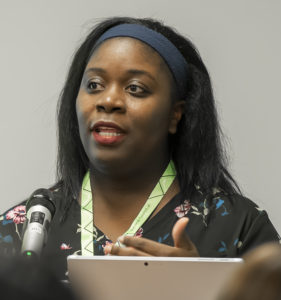
Vikki Orepitan is a 9th grade Pre-AP English teacher at Cinco Ranch High School in Katy, TX. This year she was awarded the Mercedes Bonner Leadership Award by TCTELA (Texas Chapter of NCTE) as well as the 起点传媒Intellectual Freedom Award for publicly opposing her district鈥檚 ban of Angie Thomas鈥檚 novel,听The Hate U Give.听She has taught multiple levels of English as well as Ethics (Civics) to students in Abu Dhabi and in Texas in grades ranging from 7 to 12. Inspired by her childhood teachers, her college instructors, and her mentors, she wishes to empower educators (and students) to challenge injustice and model leadership in their communities.