

This post was written by 起点传媒member Julia Torres.听It is part of听,庐听an 起点传媒initiative focused exclusively on helping teachers build their book knowledge and their classroom libraries.听Build Your Stack庐 provides a forum for contributors to share books from their classroom experience; inclusion in a blog post does not imply endorsement or promotion of specific books by 起点传媒.
When readers encounter and affirm lived realities that are not their own, there is an opportunity to experience another鈥檚 lived reality and in so doing, expand what they know of the world and accept as real or true.
At the same time, students and teachers may struggle if the people and stories they encounter detail languages, places, cultural norms, and customs so different that they have no frame of reference or can only gain a flat, one-dimensional understanding.
For example, we have only recently begun to make room in the literary diaspora for Black characters who are more than the struggles they endure, and for Indigenous characters who are not defined solely as belonging to times and places 鈥渙ut West.鈥�
What readers need to know about engaging with literature that contains stories and voices from outside our realities is that it gives us the opportunity to get outside of whatever limitations exist within our own cultures and social structures. It helps us develop tools to navigate a world full of difference with love, curiosity, and inclusivity, rather than fear.
Making room for reading and experiencing viewpoints formed in the spaces where multiple identity markers intersect is a way that we can support students inside and outside our classrooms and affirm that they are more than shadows “from the margins.”
It isn鈥檛 uncommon for children鈥檚 literature to flatten identities, create one-dimensional views of cultures and ethnicities, especially if the book is not one written by an author from a minoritized or marginalized background. The majority of books published for children, including those about the lived experiences of non-White people, are written and edited by White authors and distributed by publishing houses that are not owned and operated by people of color. Additionally, it is not an easy task to write authentically about a culture that is not your own, especially if/when characters are intersectional. But if this is not your lived reality as a reader, how do you as an audience know whether the author has written authentically or not?
Enter the idea of #OwnVoices, which is both a hashtag and a movement.
Though there are ways that White authors have undertaken the task of writing about 鈥渙therness,鈥� including getting people of color to collaborate in the writing process, there is more work that the publishing industry needs to and can do with regard to equalizing the number of publications written by (and arguably for) people of color, especially by 听people of color living within the intersections of multiple identities, including queerness and physical disability.
The idea of is a way of understanding how 鈥渕ultiple forms of inequality or disadvantage sometimes compound themselves鈥� (K. Crenshaw, NAIS, 2018).
Within the context of children鈥檚 literature, it can also be a way to understand the place where multiple identities intersect to create a new understanding of what a character or individual may experience that sets their lived reality apart as unique.
Integrating literature that leans toward authenticity and moves beyond one-dimensional depictions of identity is a beginning step toward the development of consciousness in students and ourselves that leans toward inclusivity and away from bias, intolerance, and exclusion.
This stack represents a range of #OwnVoices texts, specifically those that capture the intersections between one-dimensional identity markers we so frequently use.
Doing so opens the door to deeper conversations and studies that unpack oppressive systems, structures, schools of thought that held us back for so long. The titles selected here illustrate lived realities that have historically been marginalized or underrepresented in all literature, but especially children鈥檚 literature. Here is an opportunity to bring underrepresented voices forward from the margins and in so doing, center and make space in our collective consciousness for the affirmation of all human experience, no matter how different from our own individual identities a given experience may seem.
Elementary
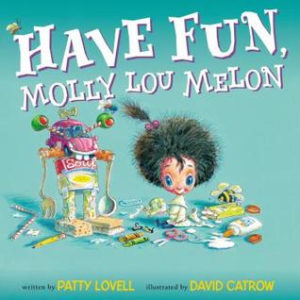
by Patty Lovell,
Illustrated by David Catrow
Molly Lou Melon鈥檚 grandma taught her to be happy with herself no matter what, but that鈥檚 not all she learned. Molly Lou heard all about how her grandma didn鈥檛 have fancy store-bought toys when she was little. She made dolls out of twigs and flowers and created her own fun in her backyard.
So Molly Lou does just that, proving that the best thing to play with is a huge imagination!
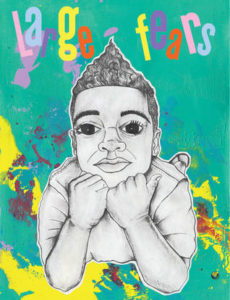
By Myles E. Johnson,
Illustrated by Kendrick Daye
Jeremiah Nebula is a Black boy who loves pink things, and he desperately wants to travel to Mars. His voyage leads him to land on stars where he is forced to 听confront all of his fears, and not just the small ones, but the really, really large ones. Will Jeremiah Nebula conquer his large fears? Will he ever make it to Mars? Blast off with Large Fears to see if Jeremiah Nebula鈥檚 dreams come true.
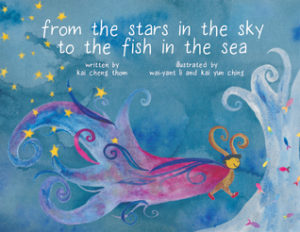
by Kai Cheng Thom
Illustrated by Wai-yant Li and Kai Yun Ching
In the magical time between night and day, when both the sun and the moon are in the sky, a child is born in a little blue house on a hill. And Miu Lan is not just any child, but one who can change into any shape they can imagine. The only problem is they can’t decide what to be: a boy or a girl? A bird or a fish? A flower or a shooting star? At school, though, they must endure inquisitive looks and difficult questions from the other children, and have trouble finding friends who will accept them for who they are. But they find comfort in the loving arms of their mother, who always offers them the same loving refrain: “whatever you dream of / I believe you can be / from the stars in the sky to the fish in the sea. ”
In this captivating, beautifully imagined picture book about gender, identity, and the acceptance of the differences between us, Miu Lan faces many questions about who they are and who they may be. But one thing’s for sure: no matter who this child becomes, their mother will love them just the same.
Middle Grades
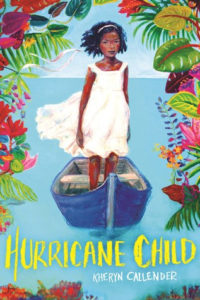
by Kheryn Callender
Being born during a hurricane is unlucky, and twelve-year-old Caroline has had her share of bad luck lately. She’s hated and bullied by everyone in her small school on St. Thomas, 听US Virgin Islands, by a spirit only she can see who won’t stop following her, and鈥攚orst of all鈥擟aroline’s mother left home one day and never came back. 听But when a new student named Kalinda arrives, Caroline’s luck begins to turn around. Kalinda, a solemn girl from Barbados with a special smile for everyone, becomes Caroline’s first and only friend, and the person on whom Caroline begins to develop a crush. Now Caroline must find the strength to confront her feelings for Kalinda, brave the spirit stalking her through the islands, and face the reason her mother abandoned her. Together, Caroline and Kalinda must set out in a hurricane to find Caroline’s missing mother, before Caroline loses her forever.
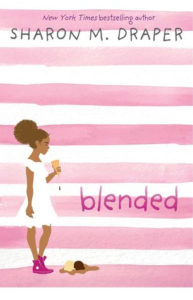
by Sharon Draper
Eleven-year-old Isabella鈥檚 parents are divorced, so she has to switch lives every week: One week she鈥檚 Isabella with her dad, his girlfriend Anastasia, and Anastasia鈥檚 son Darren living in a fancy house where they are one of the only Black families in the neighborhood. The next week she鈥檚 Izzy with her mom and her boyfriend John-Mark in a small, not-so-fancy house that she loves.
Because of this, Isabella has always felt pulled between two worlds. And now that her parents are divorced, it seems their fights are even worse, and they鈥檙e always about HER. More than ever Isabella feelsstuck in the middle, split and divided between them. And she鈥檚 is beginning to realize that being split between Mom and Dad is more than switching houses, switching nicknames, switching backpacks: it鈥檚 also about switching identities. Her dad is Black, her mom is White, and strangers are always commenting: 鈥淵ou鈥檙e so exotic!鈥� 鈥淵ou look so unusual.鈥� 鈥淏ut what are you really?鈥� She knows they鈥檙e really saying: 鈥淵ou don鈥檛 look like your parents.鈥� 鈥淵ou鈥檙e different.鈥� 鈥淲hat race are you really?鈥� And when her parents, who both get engaged at the same time, get in their biggest fight ever, Isabella doesn鈥檛 just feel divided, she feels ripped in two. What does it mean to be half White or half Black? To belong half to mom and half to dad? And if you鈥檙e only seen as half of this and half of that, how can you ever feel whole?
It seems like nothing can bring Isabella鈥檚 family together again鈥攗ntil the worst happens. Isabella and Darren are stopped by the police. A cell phone is mistaken for a gun. And shots are fired.
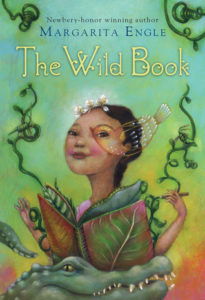
by Margarita Engle
Fefa struggles with words. She has word blindness, or dyslexia, and the doctor says she will never read or write. Every time she tries, the letters jumble and spill off the page, leaping and hopping away like bullfrogs. How will she ever understand them?
But her mother has an idea. She gives Fefa a blank book filled with clean white pages. “Think of it as a garden,” she says. Soon Fefa starts to sprinkle words across the pages of her wild book. She lets her words sprout like seedlings, shaky at first, then growing stronger and surer with each new day. And when her family is threatened, it is what Fefa has learned from her wild book that saves them.
Young Adult
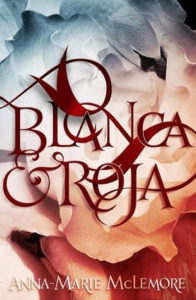
by Anna-Marie McLemore
The del Cisne girls have never just been sisters; they鈥檙e also rivals, Blanca as obedient and graceful as Roja is vicious and manipulative. They know that, because of a generations-old spell, their family is bound to a bevy of swans deep in the woods. They know that, one day, the swans will pull them into a dangerous game that will leave one of them a girl, and trap the other in the body of a swan.
But when two local boys become drawn into the game, the swans鈥� spell intertwines with the strange and unpredictable magic lacing the woods, and all four of their fates depend on facing truths that could either save or destroy them. Blanca & Roja is the captivating story of sisters, friendship, love, hatred, and the price we pay to protect our hearts.
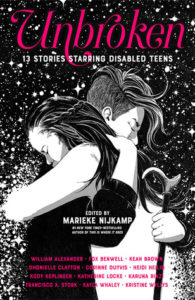
by Marieke Nijkamp
This anthology explores disability in fictional tales told from the viewpoint of disabled characters, written by disabled creators. With stories in various genres about first loves, friendship, war, travel, and more, Unbroken will offer today’s teen readers a glimpse into the lives of disabled people in the past, present, and future.
The contributing authors are award winners, bestsellers, and newcomers, and include 听Kody Keplinger, Kristine Wyllys, Francisco X. Stork, William Alexander, Corinne Duyvis, Marieke Nijkamp, Dhonielle Clayton, Heidi Heilig, Katherine Locke, Karuna Riazi, Kayla Whaley, Keah Brown, and Fox Benwell. Each author identifies as disabled along a physical, mental, or neurodiverse axis鈥攁nd their characters reflect this diversity.
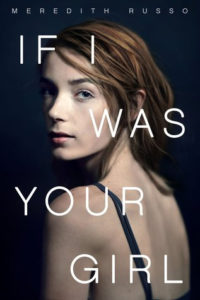 听 by Meredith Russo
Amanda Hardy is the new girl in school. Like anyone else, all she wants is to make friends and fit in. But Amanda is keeping a secret, and she鈥檚 determined not to get too close to anyone.
When she meets sweet, easygoing Grant, Amanda can鈥檛 help but start to let him into her life. As they spend more time together, she realizes just how much she is losing by guarding her heart. She finds herself yearning to share with Grant everything about herself, including her past. But Amanda is terrified that once she tells him the truth, he won’t be able to see past it.
Because the secret that Amanda鈥檚 been keeping is that she used to be Andrew. Will the truth cost Amanda her new life and her new love?
Julia E. Torres is a veteran language arts educator. Currently, she serves as the campus librarian for five schools in the far northeast region of Denver Public Schools. As a teacher/activist committed to education as a practice of freedom, her practice is grounded in the work of empowering students to use literacy to fuel resistance and positive social transformation.She facilitates workshops and professional conversations about anti-bias/anti-racist education, language arts education, and librarianship as part of social transformation, and culturally sustaining pedagogies. She also serves on several local and national boards and committees promoting educational equity and