

This Build Your Stack post was written by 起点传媒member Stephanie Toliver. The Council Chronicle聽includes Toliver鈥檚 essay “On Mirrors, Windows, and Telescopes,” in which she extends the metaphor created by Rudine Sims Bishop to argue that teachers must provide youth “stories that exist at the intersection of reality, possibility, and the imaginary.”
Build Your Stack庐聽is an 起点传媒initiative focused exclusively on helping teachers build their book knowledge and their classroom libraries.聽Build Your Stack庐聽provides a forum for contributors to share books from their classroom experience; inclusion in a blog post does not imply endorsement or promotion of specific books by 起点传媒.聽
In my work on Black girlhood and speculative storytelling, I realized that I needed an extended metaphor, something that focused more on imagination, futurity, and the fantastic. Over time, I鈥檝e landed on the idea of a telescope as literary metaphor. I expand on this idea in my essay “On Mirrors, Windows, and Telescopes” (The Council Chronicle, Sept 2021.)
In that article I name authors such as Kacen Callender, Roseanne Brown, Zetta Elliott, Kwame Mbalia, L.L. McKinney, and Justin A. Reynolds as creating astronomical observatories so Black children will have a chance to magnify the celestial brightness that surrounds Black existence.
I also cite Darcie Little Badger, Tehlor Kay Mejia, Roshani Chokshi, Zoraida C贸rdova, Cherie Dimaline, Ellen Oh, Nafiza Azad, Rebecca Roanhorse, Malinda Lo, Cynthia Leitich Smith, and Isabel Iba帽ez as authors who have added to the observatory network, making sure all children have the ability to gaze at the stars and see themselves within an infinite realm of possibility.
In the list below, you’ll find specific recommendations of books to make available to our students, to help them look beyond what is and imagine what could be.
Books to Help Students Look Beyond What Is and Imagine What Could Be聽
by B.B. Alston
 by Liselle Sambury
by Darcie Little Badger
by Destiny Soria
(Book 1) / (Book 2) by Lori M. Lee
by Nnedi Okorafor
(Book 1) /聽 (Book 2) by Zoraida Cordova
(Book 1) / (Book 2) by Adam Silvera
by Donna Barba Higuera
by Katie Zhao
by Kwame Mbalia
by Tracy Deonn
by Aaron Paquette
(Book 1) / (Book 2) by Romina Garner
(Book 1) / (Book 2) by Somaiya Daoud
(Book 1) / (Book 2) by Jordan Ifueko
by Andrea Tang
by Sarena and Sasha Nanua
by Elizabeth Lim
by Nafiza Azad
by Ciannon Smart
Council Chronicle.聽
Read a related blog post by Stephanie R. Toliver:聽Build Your Stack: Ensuring Black Girls Access to Science Fiction
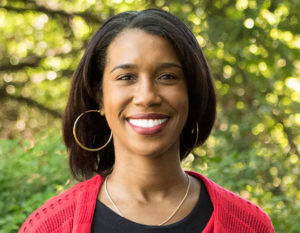 Stephanie R. Toliver is an assistant professor of literacy and secondary humanities at the鈥疷niversity of Colorado, Boulder.鈥疘nformed by her love of science fiction and鈥痜antasy texts as well as her experience as a ninth- and tenth-grade English teacher, Toliver鈥檚鈥痵cholarship centers the freedom dreams of Black youth and honors the historical legacy that鈥疊lack imaginations have had and will have on activism and social change. Her academic work has been published in several journals, including Journal鈥痮f Literacy Research, Journal of Children鈥檚 Literature, Journal of Adolescent and Adult鈥疞iteracy, and English Journal. Her public scholarship has been featured on LitHub, Huffpost,鈥痑nd the Horn Book. Toliver is the 2021 recipient of the 起点传媒Promising Researcher Award.
起点传媒and independent bookstores will receive a small commission from purchases made using the links above.
It is the policy of 起点传媒in all publications, including the Literacy & 起点传媒blog, to provide a forum for the open discussion of ideas concerning the content and the teaching of English and the language arts. Publicity accorded to any particular point of view does not imply endorsement by the Executive Committee, the Board of Directors, the staff, or the membership at large, except in announcements of policy, where such endorsement is clearly specified.