

From the 起点传媒LGBTQ Advisory Committee
听
This blog was written by Craig A. Young, a member of the 起点传媒LGBTQ Advisory Committee.
Growing up queer in rural West Virginia during the 70s and 80s was not the easiest thing I鈥檝e ever done. I and many of my friends listened to the all-too-common advice to keep your head down and your sexuality securely in the closet until you can survive on your own. Then, head directly to the closest metropolitan area where you can finally be yourself.
So if anybody had told me that I would find my dream job, buy a house, and settle down with a husband and two cats in a rural Pennsylvania town, I would have denied it until the cows came home.
Reflecting on why I saw no opportunity to be a queer educator in a small town, I think of Marian Wright Edelman鈥檚 wisdom in saying, 鈥淵ou can鈥檛 be what you can鈥檛 see.鈥�
Back home, I never saw a teacher claim a proud queer identity. I never experienced someone proving that I had a right to live and work in the schools and communities that raised me.
Many folks who live in urban and suburban enclaves see rural areas as backwards or ignorant, traits often conflated with homophobia. However, I have found that my students鈥攎any first-generation undergraduates from small villages and boroughs鈥攁ppreciate that I am a teacher who respects them enough to be his true self with them.
LGBTQ students in rural spaces and small towns deserve access to supportive and affirming teachers and curricula, as do all students.
However, studies from show that LGBTQ students in rural areas typically lack access to such teachers and materials. Many of my students will end up teaching in similarly rural areas, so it is important that they are prepared to make rural schools welcoming to LGBTQ students.
To accomplish this, I require my students to read widely and to challenge their preconceived notions of 鈥渘ormal鈥� and 鈥渁ppropriate.鈥澨� We regularly participate in book discussions and literature circles with texts that portray marginalized communities positively. We talk about 鈥渕irrors鈥� and 鈥渨indows鈥� (), while considering how seeing or not seeing one鈥檚 self in literature will affect their future students. Moreover, I talk about myself and my life authentically and unapologetically, hopefully showing them that it is possible to be queer and successful in small-town America.
I am not na茂ve enough to think my cisgender, male, white, upper middle-class identities don鈥檛 offer me a great amount of protection and reify my privilege on multiple levels. In the same way, I am realistic that many districts and buildings in our educational system will not protect LGBTQ teachers in the same way my university and my union protect me. I do, however, strive to use my position to advocate for my students and provide for them the model of open, honest living that I didn鈥檛 have myself.
Each semester, I tell my students that it is my job to prepare them to teach in the world as it is, not as I might like it to be. In the same way, they must prepare their students to live in that same world. I think the best way that I can do this is to be open and honest about the professor and person I am. Perhaps, in some small way, they will be able to do the same one day.
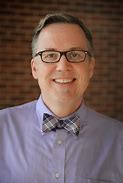
Craig A. Young is a professor of teaching and learning at Bloomsburg University of PA and member of the 起点传媒LGBTQA Advisory Committee. He teaches undergraduate preservice teachers in their ELA and social studies methods courses. His current research focuses on the analysis of diversity in upper elementary teachers鈥� read-aloud selections.