

This post was written by 起点传媒member Vikki Orepitan.
I think this week has been my favorite! The conversations in the 起点传媒Reads Facebook group were lively and inspiring! Participants have shared so many resources and ideas, and I鈥檓 so excited about my expanded 鈥淭o Read鈥� list.
Our focus this week was on the 鈥淣eed to Write鈥� (chapter 7) and the 鈥淲orkshopping Process鈥� (chapter 8). School starts for me in just under two weeks, so my teaching partner and I have been deep in the scope and sequence process. I really appreciate that Mary Styslinger takes the time in Workshopping the Canon to explain the planning process and how things can fit together.聽
Styslinger addresses the question 鈥淲hy Writing?鈥� at the beginning of chapter 7, and her response really struck a chord with me: 鈥�40 percent of high school seniors never or rarely write a paper of three or more pages鈥� (118).
In 2013, I moved back to the US after teaching for two years in an international private school. I was thrilled to be 鈥渂ack home鈥� where I knew the kids, the culture, the lay of the land. But as the first semester wrapped up, and my students triumphed over their first real research paper (historical/cultural perspective paper analyzing The Canterbury Tales), I realized something alarming鈥攚e were the only English class writing a research paper. My PLC that year had agreed 鈥渨e should definitely write a research paper,鈥� and I was excited because I鈥檇 been preparing my kids for this kind of writing all semester!
The 鈥渞esearch paper鈥� in one teacher鈥檚 class was 250 words describing a favorite character from The Canterbury Tales and the other was a 鈥淪hmoop-inspired PowerPoint.鈥� My students were furious, and I was upset and confused. The definitions of research and writing hadn鈥檛 changed, but the expectations had. That was the first and last year my campus assigned me academic (on-level rather than honors) classes as well as the last time they assigned me seniors. My personal experience supports Styslinger鈥檚 claim that 鈥淸students] need more opportunities to write鈥�.
Styslinger and the teachers in the 起点传媒Reads study agree that writing is for everyone and that it should be pervasive. I have been guilty of focusing on the analytical reading of a text, quizzing and testing over its 鈥渆ssential parts鈥� and then assigning a literary analysis essay near the end of the unit.
However, writing is not just a formal essay at the end of a unit. It shouldn鈥檛 feel 鈥渢acked on.鈥� Our facilitator, Lisa Fink, asked us, 鈥淚n what ways do you interweave the teaching of reading with the teaching of writing in your classroom? How do you support writing both as a process and as a product?鈥� and I really struggled with this one.
I use QuickWrites (infrequently) and writing as warm ups (often, but also usually unrelated to the unit focus), so I wasn鈥檛 sure that I do interweave the two. The responses of other teachers gave me a lot to think about as well! Lauren emphasized the need for balance 鈥減articularly when it comes to going beyond low-stakes writing and getting into creating a product for the unit . . . making the writing product a living, breathing task DURING the reading that then gets refined and workshopped again at the END of the unit.鈥�
I think Kim鈥檚 response strikes at the center of WTC, 鈥渉aving and working [with] an essential question [is] really helpful . . . [because] if they [students] engage thoughtfully . . . there鈥檚 much less work to do at the end! And if the end product is authentic . . . it reduces class management issues and raises learning.鈥�
We all want our students to grow as readers, writers, and thinkers鈥攁nd with WTC, Styslinger gives us one example of how.
In her summative interview with Lisa Fink, she went on to say that 鈥渢eachers are too hard on ourselves鈥� when it comes to our classroom expectations. Styslinger encourages us to 鈥渢ry something and celebrate our effort.鈥� My mentor teacher once told me that it takes at least 3 years of teaching the same subject to feel 鈥渃omfortable,鈥� so I think Styslinger is right!
Changing the content/structure of your course is a monumental task. So the 鈥渟mall steps鈥� Styslinger suggests make it significantly more manageable. She suggests starting with adding supplemental or additional texts, collecting data, and 鈥渟ee[ing] how it goes.鈥� I, for one, am trying to do exactly that! I鈥檒l let you know how it turns out!
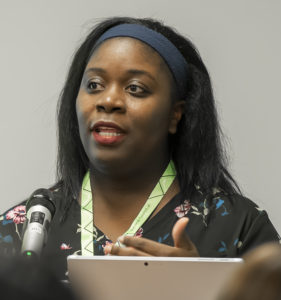
Vikki Orepitan is a 9th grade Pre-AP English teacher at Cinco Ranch High School in Katy, TX. This year she was awarded the Mercedes Bonner Leadership Award by TCTELA (Texas Chapter of NCTE) as well as the 起点传媒Intellectual Freedom Award for publicly opposing her district鈥檚 ban of Angie Thomas鈥檚 novel,聽The Hate U Give.聽She has taught multiple levels of English as well as Ethics (Civics) to students in Abu Dhabi and in Texas in grades ranging from 7 to 12. Inspired by her childhood teachers, her college instructors, and her mentors, she wishes to empower educators (and students) to challenge injustice and model leadership in their communities.