

This post was written by 起点传媒member聽Shelby M. Boehm.聽
Recently, student teachers on campus caused me to reflect on my own teacher preparation program and on a conversation that altered two aspects of my identity I had yet to unite in graduate school: reader and teacher. Our professor was discussing possible interview questions for an upcoming teacher recruitment event with my cohort. The question that bewildered us as future English teachers may surprise you: What have you read lately?
What followed was an uncomfortable silence, then rationalized defenses of being too busy to go beyond the required reading of journal articles and textbooks. I sat at the table feeling inadequate. I had been found out. Holden Caulfield would have called me a phony. How could I expect my students to read if I wasn鈥檛 making the effort?
My professor then led us through an honest conversation about how feeling busy was an inevitable part of life, and how, if reading mattered to us and our students, we would need to make that distinction both now and moving forward into our teaching careers.
Now in my fourth year teaching high school English, I鈥檝e developed a teacher reader identity that is both noticeable and familiar. Reading is routine. This matters because, when students see their teachers as readers, they continue to develop their own literacy practices.
If you鈥檙e looking for new ways to build your teacher reader identity, the following suggestions have worked for me and my classroom:
Go beyond the book talk.
The way you spend your time says much about who you are; how you spend instructional time with students is no different. It鈥檚 not enough to give an occasional 鈥渂ook talk鈥� and expect students to see you as a reader. Dedicated class time for reading self-selected texts is key for developing readers, both students and teachers alike.
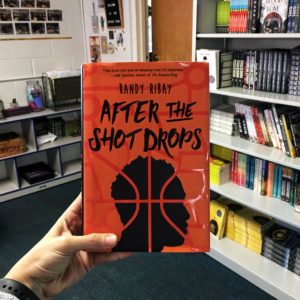 In my classroom, we have at least twenty minutes of protected class time to read a text of choice every day. We establish norms and give each other permission to explore books with this simple truth: some books aren鈥檛 for everyone (and that鈥檚 okay!), but there is a book for everyone and when you find one, it鈥檚 simply magical.
By the way, the teacher must read during this protected time, too. Attendance, grading, and other tasks can wait while you get lost in a book and show your students you鈥檙e reading alongside them.
Get off the shelf and out of the classroom.
Many teachers utilize social media accounts to connect with students and others beyond the physical classroom. These accounts can allow teachers to recommend texts and curate a reading identity outside of the classroom.
Last year, I began sharing book recommendations by using a hashtag: . Students quickly began interacting with these posts鈥攖agging friends, comparing books in the comments, and even asking to borrow books after seeing my posts online.
If you don鈥檛 want to manage an account, consider sharing already established social media accounts of other book reviewers, local booksellers, and publishing companies that frequently recommend texts that you would also recommend.
Say it with me: young adult literature is professional development
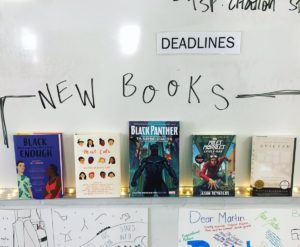 I used to feel guilty about spending weekends devouring a book while other seemingly more important tasks like grading or curriculum planning languished on my to-do list. My perception changed when I began to notice how the young adult literature I was reading informed conversations I was having with my students and impacted my pedagogy.
For example, when I read Darius the Great is Not Okay by Adib Khorram, I learned about the dangers of minimizing conversations around mental health, which I applied in my classroom through curriculum-centering discussions on toxic masculinity and imposter syndrome.
Also, the transition from high school to college portrayed in Emergency Contact by Mary H. K. Choi helped me navigate conversations with students about to graduate. The texts you choose to read and share as a teacher, especially those stories that reflect your students鈥� identities and lives, affirms their humanity and celebrates their existence in your classroom.
So, what have you read lately? For the love of reading, find time to display your teacher and reader identity to your students.
Shelby Boehm teaches tenth-grade English language arts at P. K. Yonge Developmental Research School, the University of Florida鈥檚 affiliated K鈥�12 laboratory school. She can be reached at聽sboehm@pky.ufl.edu聽or on Twitter