

This blog is written by former CNV Fellow Marilisa Jim茅nez Garcia.
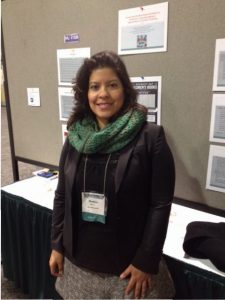 I recently had the honor of participating in a writing workshop led by award-winning author at the Highlights Foundation in Honesdale, Pennsylvania. Previously, I shared my research on Latinx literature with Meg when she came to my poster presentation at 起点传媒2015 in Minneapolis. During my presentation, I was delighted when Meg, , a mentor and renowned professor emeritus of multicultural education, and Tracey Flores, a Ph.D. candidate in literacy at Arizona State (now a ), partook in an impromptu session on the importance of Latinx-centered stories. However, at the Highlights workshop, I was able to sit down with Meg and share my work with fellow writers, and . I presented an article I had been working on for a long time; the article analyzes the development of Latinx literature for youth, particularly the recent trend in which Latinx authors, such as , , , and , recover historical traumas for Latinx youth.
We began a conversation about how Latinx communities had long been left out of U.S. and Latin American histories. Indeed, Cisneros, also a teacher in California, emphasized that as Latinos in the U.S, we often don鈥檛 know our histories because Latinx history and literature is often not part of our schooling experiences. As a group, we began thinking about the ways literature for youth functions as a way of recovering those lost histories and keeping them in view of young audiences, who may not hear them otherwise.
Beyond our personal schooling, reading, or research experiences, when we consider the reality that ethnic and Latinx Studies as recently as 2012 have recently been banned in states in the Southwest and continue to struggle for representation throughout the U.S. educational pipeline, the historical erasure of Latinx literatures and histories鈥攁long with indigenous and African American鈥攕eems particularly prevalent. This , I encourage you to get acquainted with Latinx literature, a tradition of depth and breath which generations of Latinx authors, publishers, educators, researchers, and librarians have made possible for us to read, reflect on, and remember. One takeaway from the workshop with Meg and the other writers was how much we need the various voices in the literary world to move Latino literature beyond ethnic, national, and even geographical borders in order to present young people with stories reflecting their histories and lives.
 Marilisa Jim茅nez Garcia, a former fellow in the 起点传媒Research Foundation鈥檚 Cultivating New Voices Among Scholars of Color Program, is an assistant professor in the English Department and Latin American Studies Program at Lehigh University in Bethlehem, Pennsylvania. Find her on Twitter聽@MarilisaJimenez.